
Table of Contents
ToggleLanguage learning trends 2026 are shaping up to transform how people acquire new languages. The industry continues to evolve at a rapid pace, driven by technology advances and shifting learner preferences. From AI tutors that adapt to individual needs to virtual reality classrooms, the coming year promises exciting developments.
Millions of people worldwide are picking up second, third, or even fourth languages. They want faster results, more engaging experiences, and flexible schedules. The language learning market is responding with innovative solutions that meet these demands head-on.
This article explores the key language learning trends 2026 will bring. Learners, educators, and tech developers alike can benefit from understanding what’s coming next.
Key Takeaways
- AI-powered personalization is becoming the foundation of language learning trends 2026, offering real-time feedback, adaptive lessons, and 24/7 availability.
- Virtual and augmented reality create immersive practice environments that strengthen memory and reduce speaking anxiety.
- Microlearning and mobile-first approaches dominate, with 3-10 minute lessons fitting seamlessly into busy schedules.
- Demand is rising for less commonly taught languages like Korean, Arabic, and sign languages, driven by cultural influence and business opportunities.
- Community-based learning through language exchanges, online groups, and virtual cafés accelerates progress through authentic social practice.
- Gamification elements like points, streaks, and leaderboards keep learners motivated and consistent in their daily practice.
AI-Powered Personalized Learning Takes Center Stage
Artificial intelligence is reshaping language learning trends 2026 in dramatic ways. AI-powered platforms now analyze how each learner processes information. They identify strengths, weaknesses, and preferred learning styles within the first few sessions.
These systems adjust lesson difficulty in real time. A learner struggling with verb conjugations gets more practice. Someone excelling at vocabulary moves ahead faster. This personalized approach keeps motivation high and reduces frustration.
AI tutors have become remarkably sophisticated. They can hold conversations, correct pronunciation, and explain grammar rules in multiple ways until the concept clicks. Unlike human tutors, they’re available 24/7 and never lose patience.
Speech recognition technology has improved significantly. Modern AI can detect subtle pronunciation errors and provide instant feedback. Learners no longer need to wait for a teacher’s correction, they get it immediately.
The data these platforms collect also helps predict when a learner might quit. They can then intervene with encouragement, different content, or adjusted goals. This proactive approach improves retention rates across language learning apps.
Language learning trends 2026 show AI integration isn’t just a feature, it’s becoming the foundation of effective digital education.
The Rise of Immersive and Virtual Reality Experiences
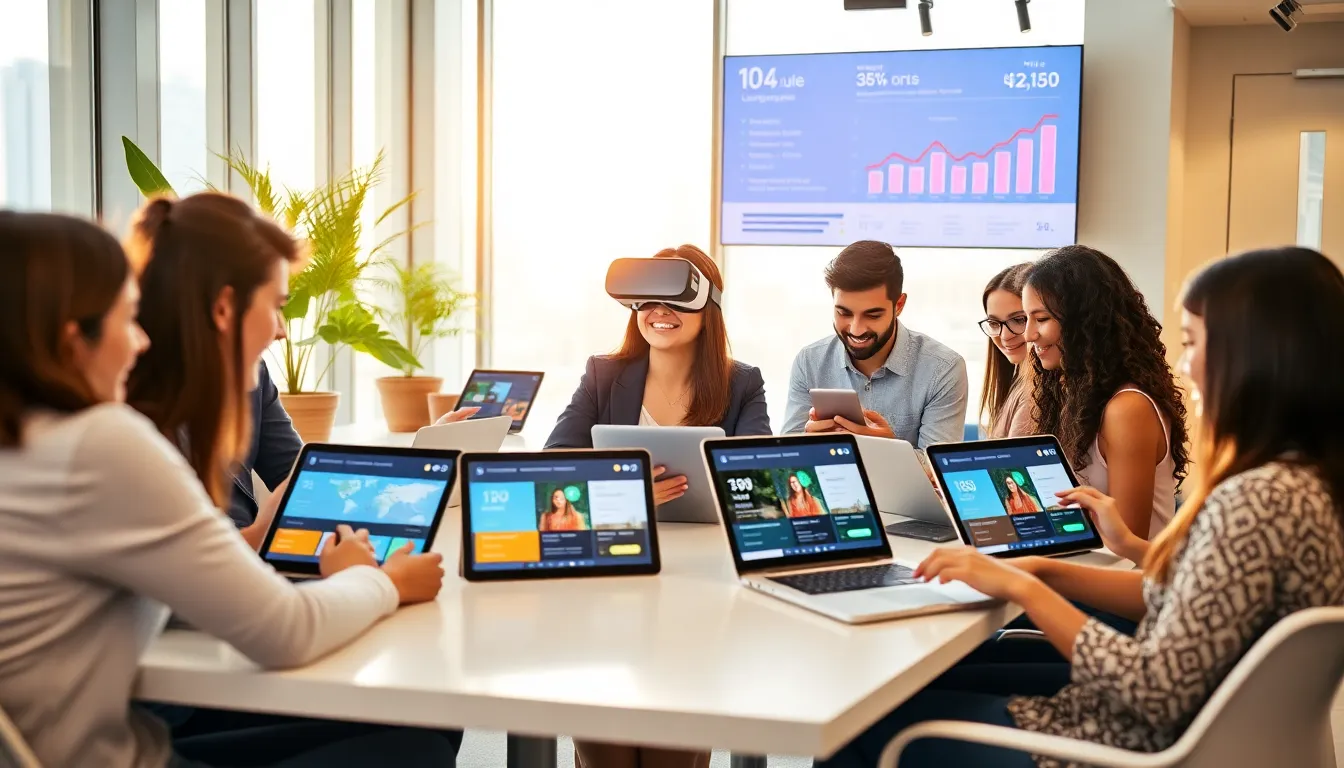
Virtual reality is transforming language learning trends 2026 by creating simulated environments where practice feels real. Learners can order food at a Paris café, negotiate prices at a Tokyo market, or ask for directions in Barcelona, all from their living rooms.
These immersive experiences trigger emotional responses that strengthen memory formation. The brain processes VR interactions similarly to real-world encounters. This means vocabulary and phrases learned in VR stick better than those memorized from flashcards.
Hardware costs have dropped substantially. VR headsets that once cost hundreds of dollars are now affordable for average consumers. Schools and language centers are incorporating VR stations into their programs.
Augmented reality offers another layer. Learners can point their phones at objects and see translations overlaid on their screens. They can practice identifying items in their actual environment, making learning contextual and practical.
Some platforms combine VR with AI conversation partners. Users can practice speaking with virtual characters who respond naturally. These characters adapt their speech speed and complexity based on the learner’s level.
The sense of presence VR provides reduces the anxiety many people feel when speaking a new language. Mistakes in a virtual setting carry no social consequences, which encourages more practice and faster improvement.
Microlearning and Mobile-First Approaches Continue to Dominate
Short, focused lessons remain central to language learning trends 2026. People have limited time but constant access to their phones. Microlearning meets them where they are, during commutes, lunch breaks, or waiting rooms.
Effective microlearning sessions last between 3 and 10 minutes. They cover single concepts: one grammar rule, ten vocabulary words, or a specific conversation scenario. This bite-sized format prevents cognitive overload.
Mobile apps have refined their notification systems. They remind users to practice at optimal times based on their habits. Smart scheduling helps maintain daily streaks without becoming annoying.
Language learning trends 2026 show that gamification elements continue to drive engagement. Points, badges, leaderboards, and daily challenges turn practice into something learners actually look forward to. Competition with friends or global users adds social motivation.
Offline functionality has improved across major platforms. Learners can download lessons and practice without internet access. This feature proves especially valuable for travelers or those with unreliable connections.
Audio-based learning is growing within mobile apps. Podcast-style lessons let people learn while exercising, driving, or doing chores. Passive listening combined with active exercises creates a balanced learning experience.
The mobile-first approach also enables spaced repetition systems. These algorithms schedule reviews at precise intervals to maximize long-term retention. Users see words and phrases just before they would forget them.
Growing Interest in Less Commonly Taught Languages
Language learning trends 2026 reveal increased demand for languages beyond Spanish, French, and Mandarin. Korean has surged in popularity, driven by K-pop, Korean dramas, and the country’s cultural influence. Japanese continues to attract learners interested in anime, gaming, and technology.
Arabic, Hindi, and Portuguese are gaining attention from business professionals. These languages open doors to growing markets and billions of potential customers. Companies increasingly value employees who can communicate with diverse populations.
Indigenous and endangered languages are finding new learners too. Digital tools have made it possible to study languages that previously had few teaching resources. Community members work with developers to create apps preserving their linguistic heritage.
Sign languages are receiving more recognition within the language learning space. Platforms now offer courses in American Sign Language, British Sign Language, and others. Video-based instruction makes these visual languages accessible to anyone with a smartphone.
Language learning trends 2026 also show growing interest in constructed languages. Esperanto maintains a dedicated following, while languages from popular media, like High Valyrian or Klingon, attract fans who want deeper connections to fictional worlds.
This diversification benefits the entire industry. Developers create more flexible platforms that can accommodate any language. Learners have more choices than ever before.
Community-Based and Social Learning Gains Momentum
Social connection drives language learning trends 2026 forward. People learn faster when they practice with others. Online communities provide conversation partners, study groups, and cultural exchange opportunities.
Language exchange apps match native speakers who want to learn each other’s languages. A Spanish speaker learning English connects with an English speaker learning Spanish. Both benefit from authentic practice and cultural insights.
Group classes have moved successfully online. Video conferencing tools enable small-group lessons with students from different countries. Learners hear various accents and perspectives, which builds flexible comprehension skills.
Discord servers, Reddit communities, and Facebook groups dedicated to specific languages have exploded in membership. These spaces offer assignments help, resource recommendations, and encouragement from fellow learners at all levels.
Language learning trends 2026 highlight the value of accountability partners. Pairs or small groups commit to regular practice sessions. This mutual obligation helps people stay consistent when motivation wavers.
Native speaker tutors remain in high demand. Platforms connecting learners with affordable tutors worldwide have grown substantially. Even a weekly thirty-minute conversation session accelerates progress dramatically.
Events like virtual language cafés bring together learners and speakers for casual conversation. These low-pressure environments help people build confidence before attempting real-world interactions.


